7 Hotel Inspired Essentials for a Spa-Like Room
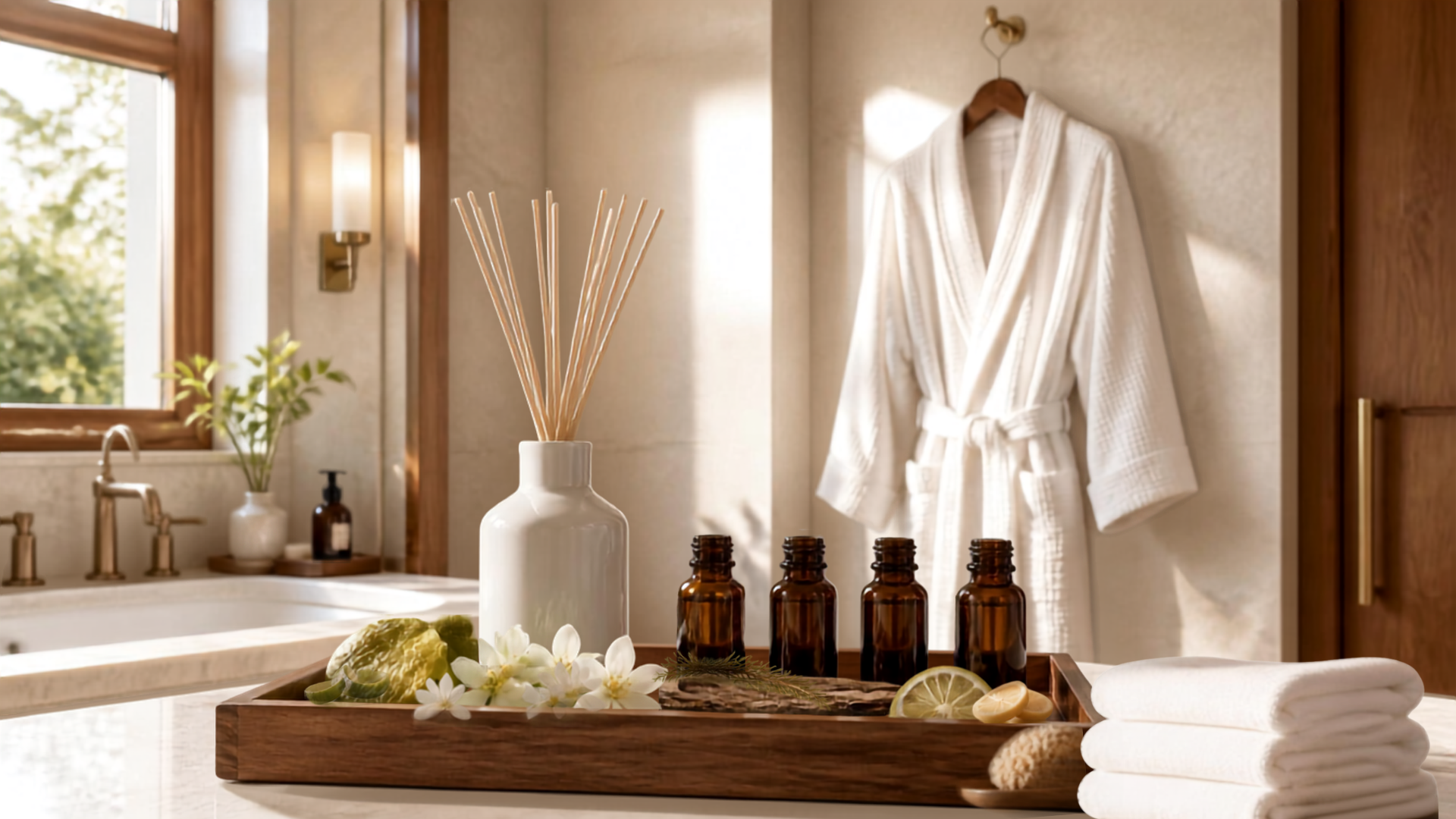
A spa-like guest room is not created by filling the space with expensive products. It is created through sensory details: softness, scent, lighting, sound, and thoughtful presentation.
The most memorable hotels understand this. Before a guest notices the thread count of the sheets or the brand of toiletries, they experience the room as a whole. The lighting is warm. The towels are neatly arranged. A subtle fragrance lingers in the air. Even the smallest amenities appear to have been placed with intention.
You can bring that same sense of hospitality into your own guest room with a few carefully chosen elements.
1. A Signature White-Tea Fragrance
Scent is one of the fastest ways to change how a room feels. White tea is particularly well suited to guest rooms because it is clean, understated, and reminiscent of luxury hotel lobbies and wellness spaces.
Its light character also blends beautifully with other fragrance notes. Bergamot introduces a bright citrus opening, jasmine provides soft floral warmth, cedarwood adds grounding depth, and gentle citrus keeps the overall fragrance feeling fresh.
Choose a reed diffuser or subtle room fragrance rather than an overpowering scent. The goal is for guests to notice that the room feels fresh and peaceful—not to be overwhelmed the moment they enter.
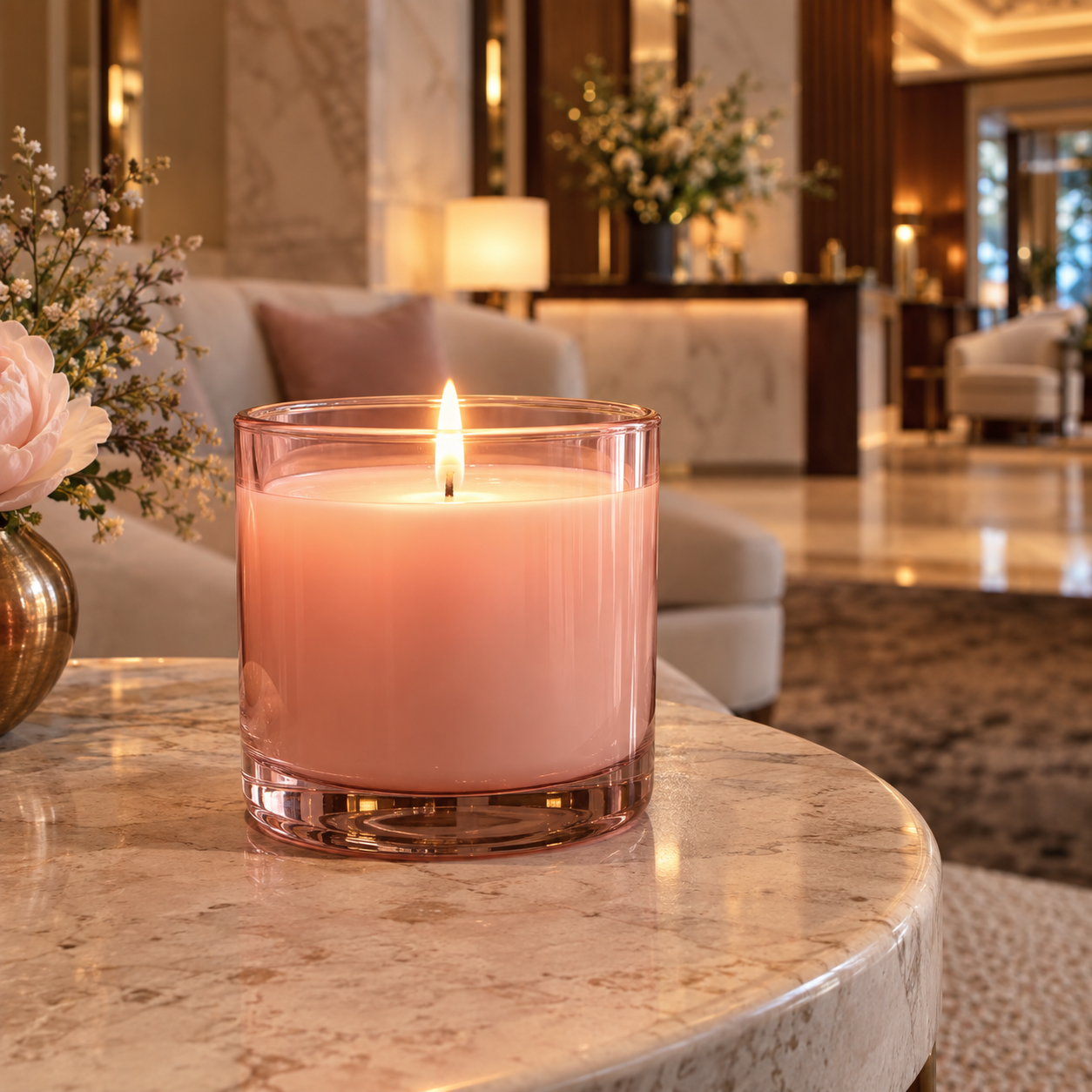
Hotel Candle Scent Inspiration
A signature hotel candle that captures the essence of arrival: Warm bergamot and green fig open the scent with a fresh, inviting brightness, followed by a heart of blond tobacco and aged cedar that adds depth and quiet luxury. Soft notes of tonka bean and vanilla-laced amber settle into a smooth, comforting base, evoking evenings in a plush lobby or a quiet corner of a guest room. Designed to be unmistakable but never overpowering, this candle inspired scent balances modern restraint with old-world hospitality—perfect for remembering a stay long after checkout.
2. Plush White Towels
Few things communicate cleanliness and comfort as effectively as fresh white towels.
Hotels often use white because it creates a consistent, polished appearance while allowing guests to immediately recognize that the linens are clean. You do not necessarily need the thickest or most expensive towels. Look for softness, absorbency, and a weight that feels substantial without taking too long to dry.
Presentation matters, too. Fold towels in thirds, stack them neatly, or roll smaller towels inside a basket. That simple attention to detail can make an ordinary bathroom feel intentionally prepared.
3. A White Waffle-Weave Robe
A robe changes the guest experience from simply having somewhere to sleep to feeling genuinely cared for.
Waffle-weave robes are especially practical because they are lightweight, elegant, and easier to wash and store than very heavy plush robes. Hanging one from a beautiful wall hook also adds texture and a recognizable spa detail to the room.
The women’s terry cloth bathrobe hits home because not only did I purchase this robe from the company directly in my hometown, it is my absolute favorite.
If space allows, include a pair of simple slippers nearby. Together, they create the feeling that relaxation has already been arranged for your guest.
4. Warm, Layered Lighting
Even a beautifully decorated room can feel uncomfortable under harsh overhead lighting.
Boutique hotels create atmosphere by using several softer sources of light: bedside lamps, wall sconces, accent lighting, and sometimes flameless candles. This allows guests to adjust the room as the day moves into evening.
A small rechargeable table lamp can be an easy addition when rewiring is not possible. Look for warm-toned, dimmable lighting that produces a gentle glow rather than bright white light. The objective is not darkness, it is softness.
5. Crisp, Calm Bedding
Hotel-inspired bedding is less about extravagance and more about creating a clean, composed presentation.
Begin with a neutral foundation in white, ivory, or a warm natural shade. Add supportive pillows, smooth sheets, and one carefully chosen throw or coverlet. Keeping the palette restrained helps the room feel restful and prevents decorative elements from competing with one another.
Before guests arrive, smooth the bedding, remove unnecessary pillows, and leave enough open space for personal belongings. A serene room should feel welcoming, not staged beyond use.
6. An Elevated Hospitality Tray
A tray transforms separate objects into a thoughtful welcome.
Place one on a bathroom counter, dresser, or bedside table and use it to organize a few useful amenities: bottled water, drinking glasses, hand cream, tea, a candle, or your fragrance diffuser and oils.
Choose a material that complements the room. Warm wood feels inviting, woven rattan adds a relaxed resort quality, and pale stone or marble creates a more polished spa aesthetic.
Resist the temptation to fill every inch. The luxury is in the restraint and presentation.
7. A Calming Sound Experience
Sound is often overlooked when preparing a guest room, yet it strongly influences whether a space feels peaceful.
A compact Bluetooth speaker or sound machine can help soften unfamiliar nighttime noises and allow guests to listen to quiet instrumental music, rainfall, or ocean sounds. Keep the controls simple and let guests decide whether they would like to use it.
This is also where hospitality becomes more than visual styling. A room can look beautiful, but scent, sound, and lighting are what turn it into an atmosphere.
Hospitality Is Found in the Details
Creating a spa-like guest room does not require renovating the entire space. Begin with the senses: what guests see, smell, hear, and touch.
A softly scented room, a warm lamp, a neatly hanging robe, and a thoughtfully prepared tray can communicate something far more meaningful than expense. They tell your guest:
You were expected, and this space was prepared with you in mind.
That is the essence of hospitality.